
Stability
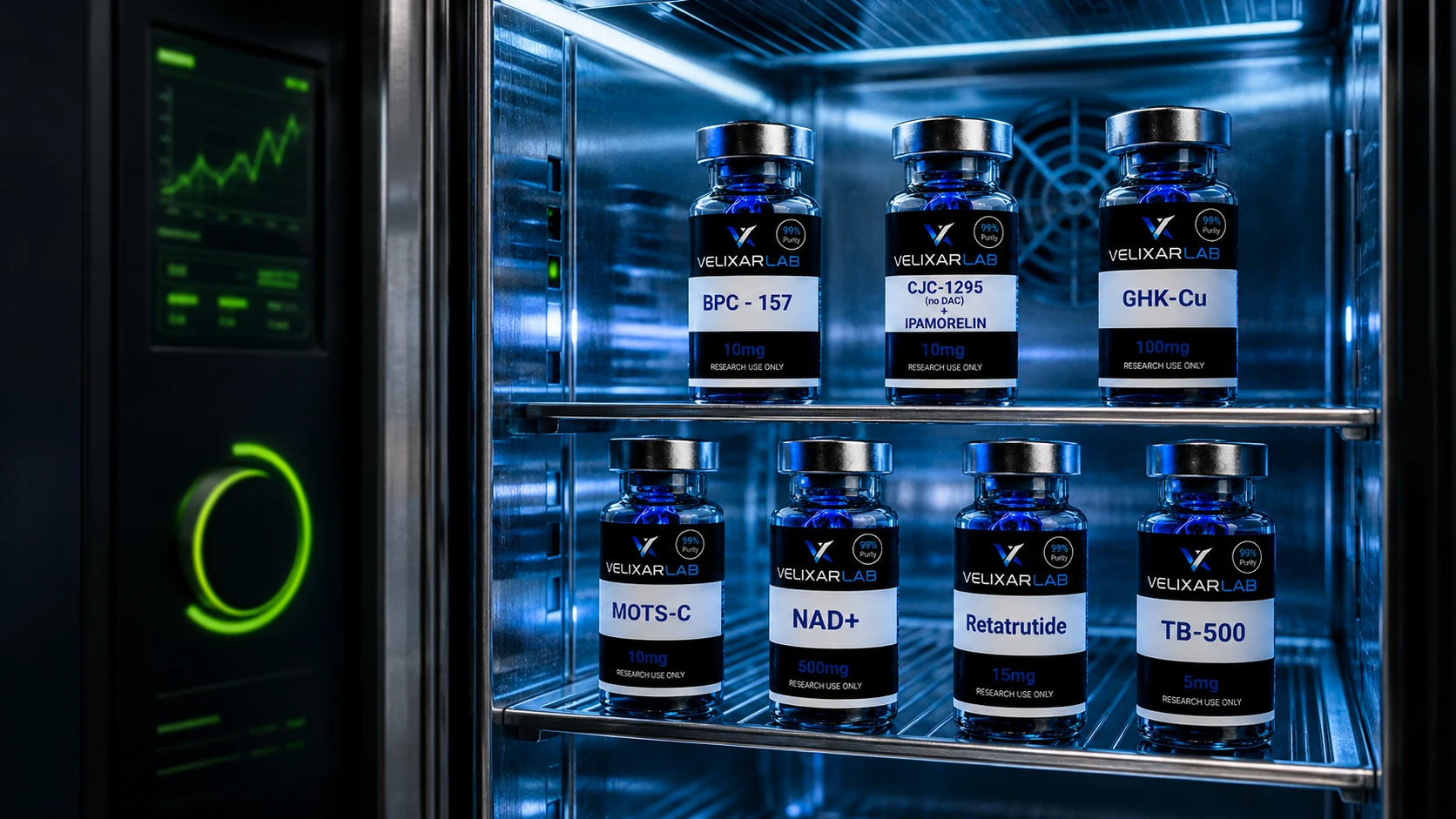
Peptides can be sensitive to temperature, light and moisture. Poor storage conditions can accelerate degradation or alter structure.
A comprehensive laboratory guide to peptide stability, storage conditions, reconstitution, labeling and handling.
Peptides are short chains of amino acids and can be highly sensitive to temperature, light, moisture and repeated handling. Appropriate storage and reconstitution help preserve structural integrity and support consistent laboratory results.
Peptides can be sensitive to temperature, light and moisture. Poor storage conditions can accelerate degradation or alter structure.
Maintaining peptide integrity helps preserve expected biological activity and supports consistent experimental outcomes.
Degraded material or contamination can introduce unwanted variables and make laboratory results less reliable.
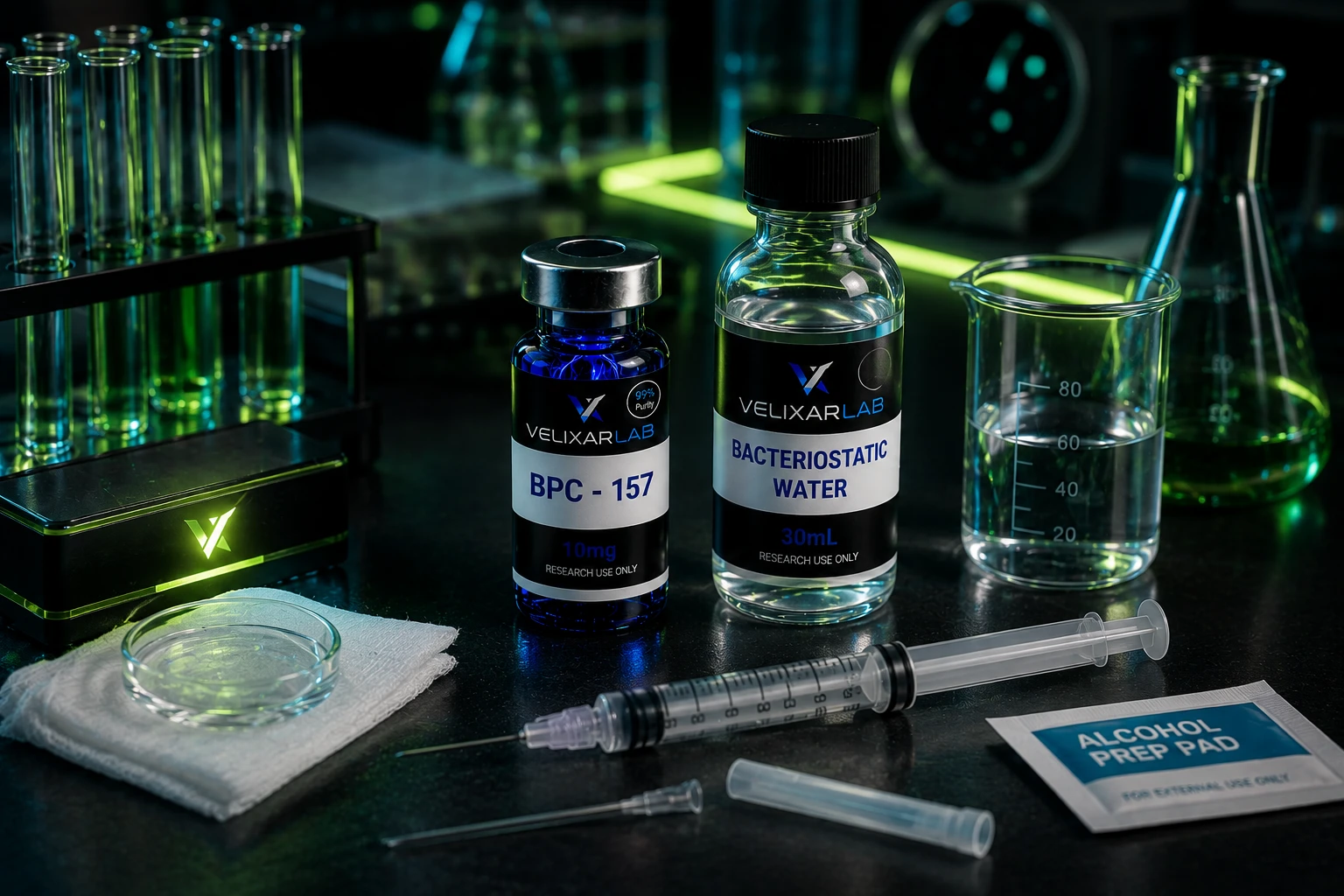
Use sterile solvents, syringes, vials and an appropriate clean working technique.
Use the product-specific solvent. Sterile water, saline, buffered solutions or another specified diluent may be required.
Avoid vigorous agitation. Gently swirl, roll or tap only as appropriate for the material.
Use the concentration defined by the research protocol and product documentation; avoid unnecessary dilution or repeated handling.
Dividing prepared material into smaller portions can help reduce repeated freeze-thaw cycles.
Match solvent pH to the peptide stability requirements in the available documentation.
Where the protocol permits, reconstitute closer to the planned laboratory use to reduce unnecessary storage time.
Label the vial with peptide name, concentration, reconstitution date and storage conditions.
Use suitable laboratory plastic or glass tools where material compatibility is important.
Unexpected visible particles can indicate instability or incompatibility. Follow the product-specific protocol before proceeding.
Proper storage and reconstitution are important for preserving peptide stability and supporting reliable laboratory results. Temperature control, appropriate solvents, clean handling, clear labeling and minimizing unnecessary handling should all be considered together.
This page provides general laboratory information. Always follow the product-specific documentation and your approved research protocol when they provide different handling, solvent, temperature or storage requirements.