
Home / Products
Buy Research Peptides in India
Explore the VelixarLab research peptide catalogue India collection, featuring research peptide products and related laboratory research compounds. Browse product listings, review available specifications, and find information about material identity, analytical testing, and laboratory documentation.
Our research peptide catalog brings together essential product information in one place, helping researchers identify the details that matter before selecting materials for laboratory work.
Research Peptide Prices in India
| Product | Strength | Price |
|---|---|---|
| BPC-157 | 5mg | Rs 3,000 |
| CJC-1295 (No DAC) + Ipamorelin | 10mg | Rs 3,000 |
| GHK-Cu | 100mg | Rs 3,000 |
| MOTS-C | 10mg | Rs 3,300 |
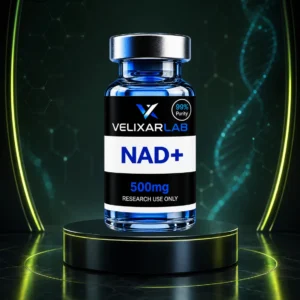
| NAD+ | 100mg (as listed) | Rs 3,500 |
| TB-500 | 5mg | Rs 3,500 |
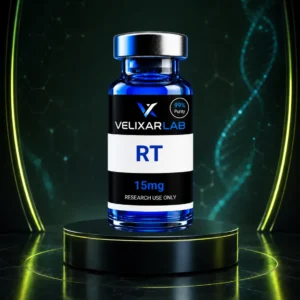
| Retatrutide | 15mg | Rs 4,000 |
Product Collection
Explore Our Research Peptide Catalogue
Browse our peptide product catalogue to explore available laboratory materials. Each listing links to further product information, including the declared form, quantity and research-use classification.
Research collection
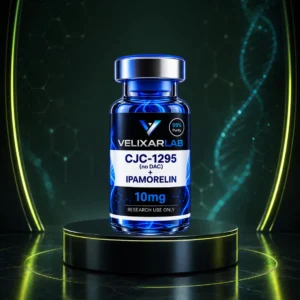
CJC-1295 (No DAC) + Ipamorelin
₹3,000.00View →
Research collection
Retatrutide (RT)
₹4,000.00View →
Buy Research Peptides Online in India
Looking for a reliable source of research peptides in India? VelixarLab supplies peptides and laboratory compounds to research labs, institutes and independent researchers across the country. You can check each product's identity, strength, physical form and price before you order, nothing is hidden. Need paperwork for your records? Batch-specific Certificates of Analysis, backed by HPLC and mass spectrometry reports, are available on request for the relevant lot.
Ordering is simple. Add the compound you need to your cart, check out online, and we process your order within 1–2 business days. We deliver to serviceable pin codes across India, and Cash on Delivery may be available on eligible orders, you'll see the option at checkout if it applies. When your parcel arrives, match the batch number on the vial with the COA before you start work. If anything doesn't line up, our team is here to help with the documentation.
Every product on this page is supplied strictly for laboratory research use only, not for human or animal consumption.
Product Information
What You Get With Every Product Listing
Each listing in the VelixarLab research peptide catalogue India collection is organized to make important information easier to review.
Testing and Purity Information
Review testing details, declared characteristics and chromatographic purity where reported. HPLC data may describe detected components but a purity percentage does not establish every quality attribute.
Batch Documentation
Review product and lot identifiers. Enquire about batch-specific certificates of analysis and check any report against the supplied material's traceability records.
Storage and Handling Information
Check product-specific handling guidance. Storage varies by compound; follow documentation and approved laboratory procedures.
How to Review Research Peptide Product Information
Selecting materials from a research-grade peptide catalogue requires more than recognizing a product name.
Confirm the Compound Identity
Start with the complete chemical name and, when applicable, peptide sequence information, peptide molecular formula, peptide molecular weight and CAS registry number. Not every identifier applies to every material. Request clarification when necessary.
Review Analytical Evidence
Different methods answer different questions. HPLC analytical data supports chromatographic assessment, while suitable mass spectrometry results may help evaluate molecular identity. Review methods, test results and sample identifiers rather than relying on reported percentages alone.
Check Batch Records
Where available, match a material's lot identifier to its analytical test report or batch-specific COA. A report from one lot should not automatically be treated as evidence for another.
Contact Us About Product Documentation
Storage & Handling Information
Follow validated institutional procedures and the material-specific guidance. Reconstitution & Storage Guide
Research Catalogue FAQs
Frequently Asked Questions About Our Research Catalogue
What Is a Research Peptide Catalogue?+
A research peptide catalogue is a collection of peptide and related laboratory material listings. It helps researchers examine declared identities, specifications, physical forms and available documentation.
What Can I Find in the VelixarLab Research Peptide Catalogue India Collection?+
The research peptide catalogue India collection includes BPC-157, CJC-1295 (No DAC) + Ipamorelin, GHK-Cu, MOTS-C, NAD+ and RT. Some materials, such as NAD+, are not peptides.
How Do I Read a Research Peptide Product Page?+
Start with the product name, chemical identity, quantity and supplied form. Review product specifications, analytical information, batch identifiers and the research-use notice.
What Information Should a Peptide Product Page Include?+
A useful listing may include chemical identity, physical form, quantity, analytical methods, available documentation and storage information. Molecular weight and sequence details may be relevant.
What Does Research-Grade Mean for Peptide Products?+
Research-grade describes the intended laboratory-use classification. It does not itself establish a universal purity threshold, sterility or suitability for a particular experiment.
What Is a Peptide Certificate of Analysis?+
A peptide certificate of analysis reports specified tests and results for an identified material or sample. Its usefulness depends on its methods, results and connection to the supplied batch.
What Is a Batch-Specific COA?+
A batch-specific COA reports information associated with a particular production lot or tested sample. Match the identifiers to the relevant material.
How Can I Verify Research Peptide Documentation?+
Check product identity, batch or sample number, laboratory details, test methods, dates and results. Ask the supplier about missing or inconsistent information.
What Does HPLC Purity Mean?+
High-performance liquid chromatography separates compounds under defined conditions. Reported purity often describes a proportion of detected chromatographic signal, not necessarily total mass content.
Does HPLC Purity Confirm Peptide Identity?+
Not by itself. Identity verification may require suitable reference comparisons or additional techniques; a chromatographic result does not automatically prove the main peak is the intended compound.
What Are Mass Spectrometry Results Used For?+
Mass spectrometry results provide evidence about molecular mass and may help investigate identity. Conclusions depend on the method and the information collected.
What Is the Difference Between Peptide Purity and Identity?+
Purity concerns the composition of a tested material, while identity concerns whether the material corresponds to the stated compound. These are distinct analytical questions.
What Is a Lyophilized Peptide?+
A lyophilized peptide is supplied freeze-dried. That form does not automatically demonstrate sterility, stability or a particular purity level.
Why Are Molecular Formula and Molecular Weight Important?+
Molecular formula describes the elemental composition of a specified chemical form; molecular weight describes its molecular mass. Both may support identification when accurately reported.
What Is a CAS Registry Number?+
A CAS registry number identifies a registered substance. Confirm that a listed number refers to the precise chemical form described.
Why Does Peptide Sequence Information Matter?+
Peptide sequence information describes the order of amino acids. Changes in sequence or chemical modifications may distinguish materials.
Why Is Batch Traceability Important?+
Batch traceability connects a material to its source lot and records, helping laboratories associate received samples with documentation.
Is NAD+ a Research Peptide?+
No. NAD+ is a coenzyme, not a peptide. Its specifications should be evaluated separately.
Can I Request Analytical Documentation for a Listed Product?+
Contact VelixarLab to enquire about available laboratory batch documentation, test results and certificates. Confirm availability for the relevant product and lot.
Are VelixarLab Catalogue Products Intended for Human Use?+
No. VelixarLab states that its research products are intended strictly for laboratory research, not human or animal consumption.
Laboratory Research Use Only
Products listed in this catalogue are intended strictly for laboratory research purposes. They are not intended for human or animal consumption, self-administration, diagnosis or therapeutic use. Researchers and purchasing institutions are responsible for assessing suitability and following applicable laws, institutional requirements and approved laboratory procedures.
Laboratory procurement
Choose the Research Material, Then Check the Evidence
Browsing research peptides online is easy. Knowing what the vial contains, and whether the paperwork matches it, takes a little more care.
VelixarLab's catalogue brings together peptide research materials and related laboratory compounds so teams can compare the fundamentals in one place. Before choosing a listing, note the chemical identity, declared vial quantity, physical form, available analytical methods and lot reference. A familiar product name is a starting point, not a substitute for a specification.
If you are comparing several listings, open each product page instead of assuming they use the same strength, peptide sequence or analytical standard. A dual-peptide blend, a copper complex and a mitochondrial-derived peptide raise different quality-control questions.
Need a documentation reference before selecting a vial? Use our research peptide datasheet guide, COA reading guide, and COA red flags checklist to understand the difference between specifications and batch-specific results.
Compare the Catalogue by Material Type
Find the relevant product specification rather than treating every research chemical as an interchangeable peptide.
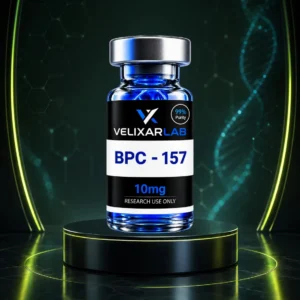
BPC-157
A synthetic pentadecapeptide. Review the exact identity, 5mg declared quantity and batch-specific assay evidence.
TB-500
Names used in the market can describe different thymosin beta-4-related molecules. Confirm sequence and modification details.
CJC-1295 (No DAC) + Ipamorelin
A two-component research blend. The total 10mg declaration does not establish the measured amount of each ingredient.
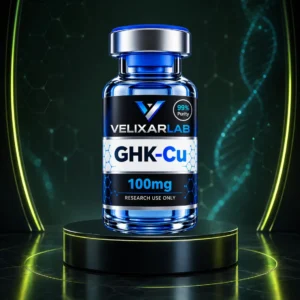
GHK-Cu
A copper coordination complex. Separate free peptide, copper association, chromatographic purity and actual content.
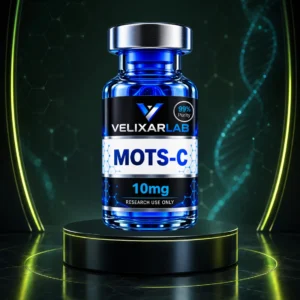
MOTS-C
A mitochondrial-derived research peptide. Check the stated sequence, molecular identity and lot documentation.
Retatrutide (RT)
An investigational triple-receptor agonist research listing. Clinical trial findings do not validate an independently supplied vial.
NAD+
A related laboratory compound, not a peptide. Assess its own identity, formulation and applicable analytical requirements.
Documentation first
Five Checks Before Placing a Laboratory Order
- Confirm the substance. Match the chemical name, peptide sequence or blend components with your research protocol. Marketing names alone may be ambiguous.
- Read the declared strength carefully. A vial labelled 10mg describes a nominal amount; a two-component blend also needs an individual component breakdown.
- Ask for a lot-specific COA. Check the batch number, issuing laboratory, analysis date, reported methods and units. An undated example report is not proof of the lot you receive.
- Separate purity from measured content. An HPLC peak-area percentage does not automatically establish sequence identity, net peptide weight, sterility or endotoxin status.
- Check shipping, stability and permissions. Confirm the delivery location, appropriate receiving conditions and any institutional or regulatory requirements for your planned work.
For questions about current documentation, contact VelixarLab with the compound name and, where available, the batch identifier. For general records and storage topics, see the research FAQs.
Research Peptide Ordering FAQs
Can I compare research peptide products on one page?
Yes. The catalogue table shows the currently displayed strengths and prices, and the product cards link to individual specifications. Confirm details at checkout because availability and prices can change.
Does a high HPLC percentage mean a vial contains the claimed amount?
No. Chromatographic area purity, molecular identity and measured content are different results. Ask what was tested and which methods support the COA.
Are all items in the catalogue peptides?
No. The range includes related laboratory compounds such as NAD+, which require their own identity and quality checks.
Can I obtain batch documentation before ordering?
Ask the team which lot-specific reports are available for the material you are considering. The existence of a general COA statement does not guarantee every test was performed on every lot.
Is research-use material suitable for human or veterinary administration?
No clinical suitability or regulatory authorisation should be inferred from a research catalogue. These listings are intended for lawful qualified laboratory research, not diagnosis or treatment.
Where should I compare costs?
Use the price table above for current listings and individual product pages for the applicable strength. A forthcoming guide will explain how to compare quoted amounts per milligram without confusing different compounds or test standards.