
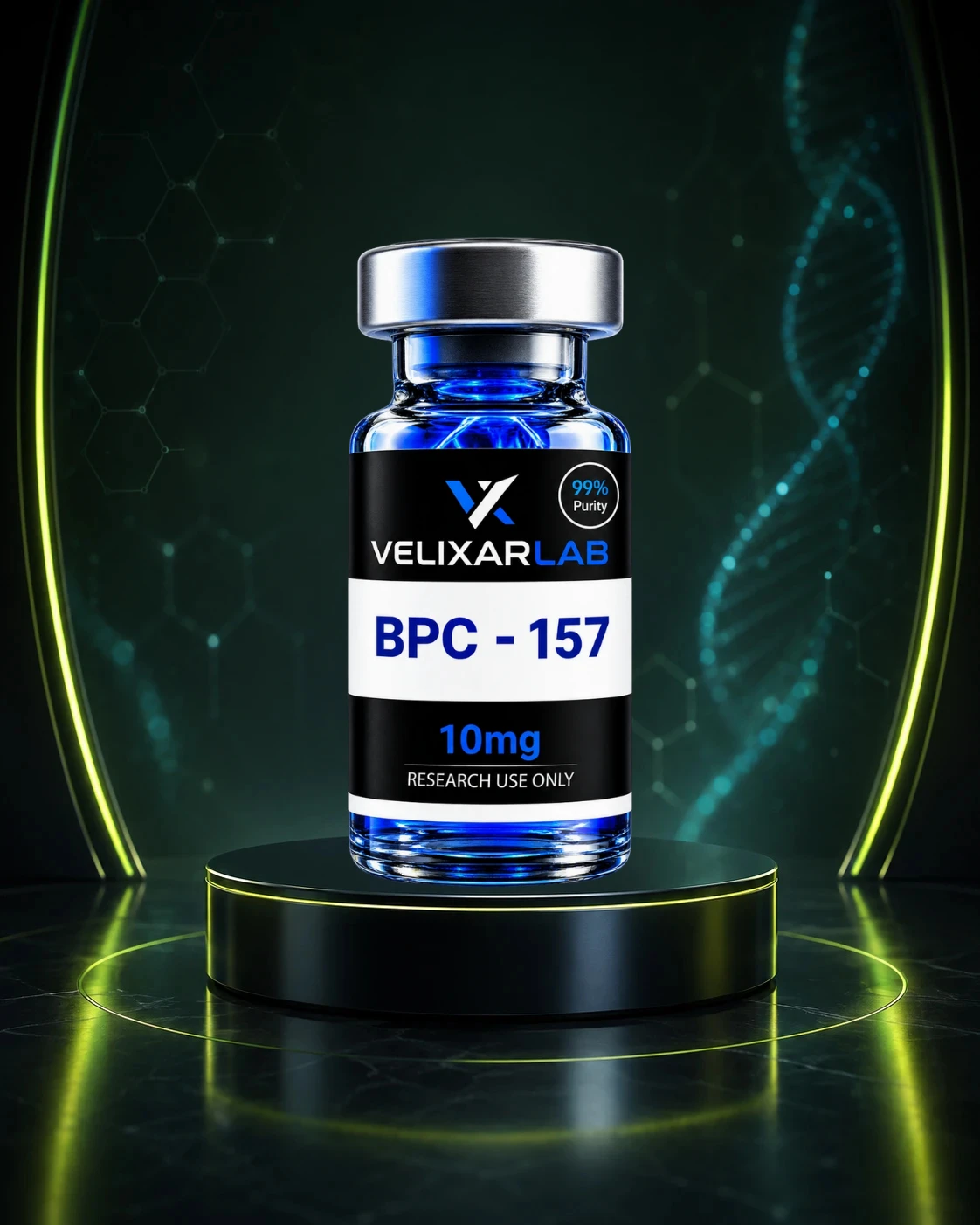
BPC 157 Peptide for Laboratory Research
The BPC 157 peptide is a synthetic chain of 15 amino acids, also called a pentadecapeptide. It appears in experimental literature on cell signalling, tissue responses and gastrointestinal models. Most findings come from laboratory or animal work. That distinction matters because a promising result in a model is not a verified treatment outcome in people.
VelixarLab lists BPC-157 5mg as a lyophilised research powder for qualified laboratory use in India. The name and declared quantity describe the listing, not an independently verified assay result. Researchers should request the relevant batch certificate before assessing whether the material fits their work.
BPC-157: Product Details
- Product nameBPC-157
- Peptide classSynthetic pentadecapeptide (15 amino acids)
- Declared vial strength5mg, subject to batch verification
- Physical formLyophilised (freeze-dried) powder
- Research contextIn-vitro and appropriately authorised preclinical investigation
- Analytical checksIdentity, chromatographic purity and content, as applicable
- DocumentationRequest the certificate for the specific lot
- Use restrictionNot for human or veterinary administration
What’s Included
The current listing describes one BPC-157 5mg research vial and a complimentary bacteriostatic water vial. Confirm the current package contents at checkout. Included solvent does not turn the material into an approved injectable medicine.
Price and Availability in India
The currently listed product price is ₹3,000 for the 5mg vial. Stock, shipping eligibility and any delivery charges are determined at checkout. Read the shipping policy before placing a laboratory procurement order.
What Is BPC-157 Studied For?
In published experiments, BPC-157 has been investigated in animal injury models, gastrointestinal research and cell-based systems. Reports have explored processes such as endothelial signalling, angiogenesis, inflammation-associated markers, cellular migration and responses in tendon or ligament models.
These are research endpoints, not an established list of benefits. Results vary with the species, experimental design, comparator and dose used within each study. In-vitro observations cannot establish efficacy, exposure or safety in humans. A 2026 systematic review of human evidence found that the available clinical evidence was insufficient to support routine clinical use.
Read the systematic review of human BPC-157 evidence alongside the 2025 preclinical musculoskeletal review to distinguish experimental findings from clinical conclusions.
Quality Assurance: What a BPC-157 COA Should Answer
A Certificate of Analysis (COA) has value only when the sample, lot, methods and reported results can be traced. Our batch COA interpretation guide explains the reporting essentials. A statement such as “99% purity” is incomplete without knowing what was measured.
Identity is not the same as purity
Mass spectrometry, where suitable, can provide molecular-mass evidence. HPLC can estimate the proportion of included chromatographic signal assigned to a peak. One does not replace the other, and neither automatically confirms every aspect of sequence identity, vial fill or sterility.
5mg on the label is not a content assay
The declared 5mg strength should be distinguished from a validated measurement of net peptide amount. Water, counterions, residual solvent and the assay basis can affect interpretation. A chromatographic area percentage does not directly establish how much peptide mass is present.
Verify the actual batch
- Compare the material name and batch number on the vial and report.
- Check the issuing laboratory, analysis date, method and result units.
- Confirm whether identity, purity, assay and other relevant tests were actually performed.
- Ask about unexplained missing values rather than assuming they passed.
For a batch-specific COA or analytical report, contact VelixarLab. This page does not make an unverified claim that any particular lot has passed a specific purity threshold.
BPC-157 and TB-500: Different Research Compounds
BPC-157 and TB-500 often appear together in search results, but they should not be treated as interchangeable peptides. They have different molecular identities and research histories. BPC-157 is a 15-residue peptide; products labelled TB-500 may refer to different thymosin beta-4-related materials, so exact identity and sequence must be confirmed from the product and batch records.
If a project compares these substances, record the assay conditions and evidence for each separately. The VelixarLab TB-500 research listing is a separate material, not evidence that a mixture has a proven therapeutic advantage.
Receiving and Storage
At receipt, note the lot identifier, seal condition, shipping records and accompanying documentation. Storage conditions depend on the material and formulation, so follow the actual product-specific stability data. For general documentation principles, see research-material handling.
Reconstitution and Calculations
For legitimate analytical work, record the measured material quantity, solvent identity, final solution volume and concentration units under an approved laboratory protocol. The research calculation is not a human dosage recommendation. Neither a complimentary solvent vial nor a calculator determines a safe administration route or dose.
Regulatory and Evidence Limitations
BPC-157 is not an FDA-approved medicine, and the presence of a research-use label does not amount to approval for clinical administration or bypass legal controls. The US FDA has discussed unresolved concerns around characterisation, immunogenicity and insufficient clinical safety information. Regulatory requirements in India depend on the product, transaction and intended activity; qualified institutional review may be necessary.
See the FDA’s 2026 technical review. This official source describes regulatory considerations and is not an endorsement of any supplier or lot.
BPC 157 Peptide: Frequently Asked Questions
What is BPC-157?
It is a synthetic peptide made up of 15 amino acids, studied mainly in preclinical experimental systems.
Is the listed 5mg vial ready for medical injection?
No. It is listed as laboratory research material. Neither this description nor the inclusion of solvent establishes sterility, clinical suitability or regulatory authorisation.
Does HPLC purity prove the stated peptide content?
No. HPLC peak-area purity and actual net peptide content are different measurements.
What does the BPC-157 price in India include?
The listing currently shows a 5mg research vial at ₹3,000 and describes a complimentary bacteriostatic water vial. Confirm the actual checkout total and package before ordering.
How is BPC-157 different from TB-500?
They are distinct peptide materials with different identities and research histories. Comparisons should specify the exact compounds and experimental evidence rather than assuming similar effects.
Is there an established human BPC-157 dosage?
No validated therapeutic dosing regimen is established. Laboratory concentration calculations must not be interpreted as directions for self-administration.
How can a laboratory check its COA?
Request the lot-specific report and compare its identifiers, methods and results with the supplied vial. For documentation questions, use our contact page.
Independent Research Sources
- Systematic review: human evidence for BPC-157
- Systematic review: BPC-157 in orthopaedic sports medicine
- US FDA: 2026 BPC-157 compounding review
These sources provide independent scientific and regulatory context. They do not certify any VelixarLab product or batch.
Research-Use Notice
BPC-157 products on this page are offered solely for lawful qualified laboratory research. They are not approved medicines and are not intended for human or veterinary consumption, injection or treatment. Published experimental findings do not establish clinical effectiveness or human safety.
Reviews
There are no reviews yet.